Trust The Children

Wednesday, October 13, 2010


Just reading an article about narrative centered learning environments. This is where your lesson is a story line, and you insert the students into that story line as one of the characters. The example was an island where biological research is going on. A group of students get to visit the island as part of a field trip. While there, the biologists begin to get sick and must be quarantined. As the plague continues, the visiting science students have to take over and figure out where the sickness comes from and how to stop it. They can talk to "people" on the island. They can read the notes of the now sick scientists, and the can run experiments.

What is interesting about this was a measurement in this study of the kids attitudes (boredom, flow, confusion, frustration, delight, and surprise) while they did this lesson and how their attitudes changed or didn't change in the process of this learning experience. In this experiment, for many of the kids, there was evidence of all kinds of movement from one state of attitude to another. Some began bored, and then got into it and became delighted, etc. All except one condition. Can you guess which one? Frustration. Frustrated learners, remained frustrated learners. You just couldn't get them to transition away from frustration.

What then, creates a frustrated learner? This seems to me to be an important question to answer for home schoolers. If this study has any merit, it suggests that once a student is frustrated, it's pretty tough to get them off that stump.

Your thoughts?


Labels: , , ,

Friday, September 17, 2010

Why is Instruction Ineffective?


Ineffective...


"Often students need to learn facts or even skills, for the purpose of finishing a set of home work problems or in order to pass a test. [Most often] there is nothing about their new knowledge that helps them achieve a goal that is both relevant and meaningful to them." Roger Shank

In some ways, this is another way of describing the ADD or ADHD child. It is true, that brain scans show a difference between an ADD and non-ADD child. But so often, the kids are just bored. They need to move. They are hunting for answers to "Why am I doing this at all?"

Much instruction does not answer the question, "Therefore, what?"

I have pictures of scales on my wall. Elements that oppose one another sometimes.

Learn "that" vs Learn "how to".
Know "that" vs " Know "why".
Content coverage vs. Critical/engaged thinking
Transmissive education vs Interactive education
Mastery of content vs Mastery of the process of learning.
Content vs skills

Kids feel instruction has impact when it contains "meaningful imagery, surprise, amazement, and when it contains practice that makes them better at something." (Michael Allen) As a grandparent with grandkids living with me for a few weeks, nothing brings a smile to me and my grandchildren more, than when they come running up to me and say, "Grandpa, Grandpa look what I can do!" (Merrill) The total opposite of a bored, unengaged learner. They love learning when they can do stuff better. More how to instead of about. (Google David Merrill- First Principles of Instruction. It's really not that hard to read.)

So what makes instruction ineffective? Here are a few ideas... add your own.
Why is instruction ineffective?

1. It does not lead to results or actual transfer from the learning environment to the real world.

2. It doesn't lead to the personal life success of the students, but makes the teacher's ego feel good... "I really taught them alright!"

3. It lacks contextual structure. The right approach for the right intent of the class. (Michael Allen) they hear all about biology and not why it makes a hill of beans in their lives, except the state requirements are achieved. Liberal Arts education should be about going broad to FIND something. And when you find it. Stop and take it deep. Go deep and learn to love it. But no, the bell rings and we need to suppress any enthusiasm we might have for the topic and move on.

4. The relationship between the student and the teacher isn't a reciprocal one. Most often the teacher sees the student as empty and it's her job to fill them up. Teachers ask questions of students. Yet, if students were asking questions of teachers, they would be mastering the very art that leads to reflection, inspiration and innovation... question asking. Without reciprocity in the classroom, the experience is largely one way, and discovery is discouraged. Result? Bored kids. Its so much about convincing instead of communicating.

Good teaching is hard, and most teachers just don't have time for it. A few days ago, a colleague dropped by and I showed him a new instructional model meant to enhance the chance that a student would actually take something out of the classroom and use it. He became very excited and then his face turned down to a frown as he said, "This would take a long time to prepare."

Yep, it does. So what's the option? Go back to talking down to students where learning doesn't happen? Unfortunately, that is usually the case. Not meaning to give someone a guilt trip. Teaching can be a wonderful adventure, until it isn't any more.

Labels: , , , ,

Friday, September 10, 2010

Why is Instruction Boring, whether at home or in the system?


It's been quite a while since I posted something here. It's not because I don't type a lot, or write a lot, its' because, you don't grade me and this blog isn't a strategic part of my degree. And that is terrible. So I need to repent and change. I am older now, slower and have more to do than I ever thought I would. I am long since out of familiar patterns of accomplishment, and in what Vygotsky calls, "The zone of proximal development", which is basically anything that is NOT the comfort zone.

I have these major authors who I have come to respect, because, at least over the last 2 years, their ideas have stuck. They have not gone away. I use their ideas all the time, and our online instruction is a cut above others out there because of these ideas.

So I asked my self the question: Why is instruction boring? I ask this question all the time, because frankly, I don't want to create boring instruction if I can avoid it. And in a book that you might not think had much to do with the topic, I found some answers. The book is titled, "Death by Meeting" and the author is Patrick Lencioni.

Anyway, I made this list of answers to that question, from his book and a few other sources. I thought I might share as part of my penance So here goes:

Instruction is boring because:

1) Most often it lacks drama or conflict.
2) It doesn't answer the question, "What is at stake?" or in other words, "if you don't know this what is going to go haywire in your life?" What is at stake if you don't get this.
3) Teachers don't mine for conflict. I don't mean encouraging "contention" I mean encouraging different points of view and negotiated them against a common family value.
4) Teachers don't reinforce engagement. Teachers reinforce finding the right answer, instead of rewarding students for finding, expressing and possessing different "questions". Like Cheri Toledo said, "If we can teach them to ask questions, and give permission for their questioning, we set the stage for critical thinking to occur." We need not be afraid of critical thinking, because if we don't have the answers as parents, we get to study something else of interest WITH our kids.
5) It lacks real world context. This is simply helping our kids see how one thing relates to another thing. That biology is related to math and related to history too.
6) It lacks personal relevant challenge. A 13 year old worries about acne and might be interested to know that Napoleon did too. But we all have to get over it. And that is a challenge. Besides it's cool learning about math so you can build a workshop on your property and build an airplane with your dad.
7) Teachers too often teach about the topic instead of the persons relationship to the topic. "How does this topic mean a hill of beans to me" is what kids want to know. The great teachers can answer that question.
8) Because it lacks, imagery, surprise, amazement, and meaningful practice so that kids get better at something and know it.
9) When it is not set in the context of the kid's lives. They don't live in school really, no matter how much the government wants to have that control. They also live at home, at church, at work, with their friends, parents and cousins, in their hobby life, sports, clubs and just in the neighborhood. If you want instruction in your "classroom" to stay in your classroom and go nowhere else, then don't teach it framed in these other places kids live. But if you want your instruction to be used outside of your classroom, frame it in these other places as you teach it.

I need to go, but my next post will be some ideas about Why instruction is ineffective? or at least a few possible reasons that lead to that.

Labels: , ,

Tuesday, January 12, 2010

What Does This Mean, Really?


Our son Sam, just returned from two years in Brazil. He was under the gun to earn some money and get registered at USU to begin his college experience. He took the advanced placement math test and did well. With prayer and persistent effort, he made it all happen and aeronautical engineering, here we come.

He attended his first math class. As the teacher began explaining things on the board, what should have been pretty easy, seemed more complicated than he expected. After class, he read the book though, it was was crystal clear to him. He thought about it and after a while realized that in all the years he had studied math, he had never had a teacher. Using Saxon Math, he had taught himself math from grade school, all the way through high school. Imagine that, taught himself. Learning this subject from a teacher was for him, the exception, not the rule.

So is this good or bad? He will certainly encounter college classes where he will need to learn from a teacher. But how cool is it that he has habits of self direction that allow him to be an independent learner? In a subject like math?

As we consider the benefits, goals and hopes for a home schooling life, what balance of self taught and teacher taught do you want to see in your child?

Labels: , , ,

Tuesday, March 24, 2009

Environment of Trust

How important is trust in the education of your child? Trust between you and them. Trust between siblings?

How effective is instruction in a home where parents don't trust one another?

What if you were sending your children to a public school, and found out that the faculty and staff there had little or no trust one for another? Would you consider that the lack of trust between teachers would have an impact on your child?

Trust is the foundational element in all human relationships. I suppose we begin a relationship with a certain assumption of trust. Then over time our assumption is either vindicated or eroded based on experience.

Trust grows or wanes like this:


From Wikipedia, "In 1958 [William] Schutz introduced a theory of interpersonal relations he called Fundamental Interpersonal Relations Orientation (FIRO). According to the theory three dimensions of interpersonal relations were deemed to be necessary and sufficient to explain most human interaction. The dimensions are: Inclusion, Control and Affection. These dimensions have been used to assess group dynamics."

Trust then, grows or wanes in these three areas much like this diagram.


Schultz makes the point, that each of these three areas must be developed at a reasonable depth between people in order for productive human relationships to be experienced.

For instance, some people who have been abused or who have been abusers, have very low trust scores generally. Therefore in the area of control, they often need over-under relationships with other people instead of equal relationships. One way they accomplish this is passive resistance, showing up late to meetings, etc. President Clinton and his wife are notorious for this behavior, as is President Obama. Shouting down other people. Using moods to manipulate others, staring others down when a disagreement ensues, all because they need total control of not only their own environment, but of others as well.

Similar behaviors are also found in the areas of inclusion and affection. Inclusion asks "am I in or am I out?" Others want to keep others out, especially when they are insecure about their own position or feel they are hiding something. Affection asks the question, "how close are we going to get?" Some people, needing to hide something or because of fear, keep others at a distance or pick one or two as their objects of affection, excluding others. These are scarcity mentalities in any case.

In any group, when major violations of trust have occurred, back stabbing, back biting, blocking, hindering, etc. the group finds itself stuck cycling around and around with no way for progress to be made in the group dynamic.

The point of this is that growing children is like growing plants. It's a lot about the environment. Whether at home or at a public school, when the environment is over controlling, lacking inclusion and affection, the children may do their duty and continue the educational experience, but they will not escape without harm, sometimes significant harm.

If you were to measure your trust environment, on a scale of 1 to 10, how would you measure it?

Labels: , ,

Friday, January 02, 2009

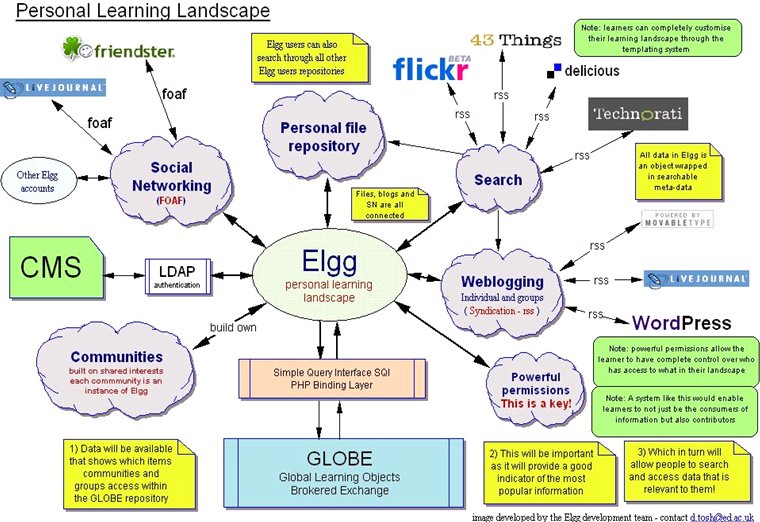
Personal Learning in 2009


When I was a little boy, and the space program was in full bloom, I used to stay up all night waiting for the launch of a rocket into space. An image that always intrigued me was an astronaut surrounded by switches and gauges and knobs. He had all this control and information at his fingertips. It was all very fascinating to me then. this picture of a Boeing Cockpit will have to do, but you get the picture.

I partially fulfilled the dream of experiencing this myself when I became a pilot. While I think that world of a private pilot is still way to complicated with too many knobs and instruments, learning to combine all the information from all the instruments into my mind to help me travel safely from one place to another was fulfilling and satisfying. I guess that is why I miss it so much right now.

In a similar way, there is an idea for personal learning that I have been introduced to this last few months that has some of the same thrill and feeling of control I felt flying.

The idea is having your own personal learning environment and the giving it a bit of time each day.

Here is a link to a movie about 10 things you can do in 10 minutes that can help you in your personal learning quests. [http://www.youtube.com/watch?v=akAfCrOVhrM]

Here are some links to maps others have made that describe their own virtual personal learning environment. Before you go there, please please understand that mine isn't as complete or complicated as theirs, nor will it ever be. So think of the idea more than needing to "be like mike".

http://tesl-ej.org/ej34/m1pix/graphic1.jpg

http://octette.cs.man.ac.uk/jitt/images/5/55/Hibert_PLE_diagram_small.jpg

http://eduspaces.net/davidds/files/9773/22011/miPLEmini.PNG


I think what inspired me here, is taking the step as an adult, to promoting personal learning and growing, without needing a school, or a formal teacher or tests or evaluation or grades. I can start simple, with a blog, and facebook, and a few RSS feeds. And that can teach me a lot.

I do understand that there are many people who have given up on learning. It was like school was finally out for the last time and any form of formal learning went out the window too.

It was never that way for me. I just enjoy learning, mostly from others who are older, more experienced and smarter than I am. I was reminded recently, and painfully that for many, their circle of learning is unfortunately small and limited to like minded people and ideas. These are rarely stretched in their thinking and imagination and are comfortably "excluding" in their vision of "harmony" and group dynamics. Such people are very uncomfortable with different points of view, discussion, and the idea that others, older and wiser, could contribute to their lives in meaningful ways. Afraid I think. Did they get that fear from public schooling? I don't know, but that attitude is "I am pretty self sufficient thank you". So sad. All of us are more complete with the ideas of others.

I am in a happier place now, with others who are stretching and growing, and willing to risk sharing their ideas knowing that sometimes we are right, and sometimes we are wrong. Either way, we continue to learn in rich and deep ways. Is there exclusion here too? Sure. I think that is part of the "natural man" to hurt others through exclusion. Images of PS playgrounds, choosing teams, the new kid a school, cliques pointing and laughing come to mind. It does carry forward into adulthood. The good news is that there is less of it here, slightly. That "slightly" makes all the difference.

This idea of having a Personal Learning Environment is more available now than ever before. Instead of surrounding our selves with switches and knobs and instruments, we surround ourselves with blogs and wikis and relationships on Facebook and Ning where we can expose our ideas to others and receive their comments. Read the ideas of others and "comment" to them wanting to know more. All in all, a very inexpensive learning classroom which we make for ourselves.

Recently, I reached out for ideas from one of the social networks I belong to and had two very meaningful responses. Two people, much smarter and wiser, led me closer to finding the information I was seeking.

For me, having a PLE is important, because, of two quotes that continue to impact my life. I have blogged about them before. James Ferrell, author of "The Peacegiver" said, "Children learn more watching other people learn, than from watching other people teach." The other is from the Harvard Business School, "HOW we teach is WHAT we teach." The common thread for me is the impact of a "teacher" who demonstrates more excitement for personal learning to students, than for expounding and explaining. Having a personal learning environment, often brings to my consciousness, new ideas and perspectives about which I get very excited and animated. This personal excitement and animation is infectious. Also, my students get to see me learning about "teaching" as I try different approaches. When they observe this enthusiasm for not only the topic but the delivery of the topic, they are impacted.

So let's talk more about creating PLE's in 2009. I am preparing a presentation about PLE's and Using Technology to drive learning deeper mostly for my family, but I hope it eventually becomes good enough to post here as well.

Labels: , , ,

Wednesday, October 15, 2008

I May Have Found It


I had a wonderful interview with the Assistant Dean of the Huntsman School of business today. He is assisting me in some research I am doing and a short paper I am writing. One idea that came out of the discussion has stuck with me all day.

I am not sure why it is, but as home educators we often say, and I have said, that there are as many approaches to educating at home as there are children. At the same time we make that statement, we are kind of also saying, that any method of instruction will do. So you choose your way and I will choose mine and since our children are different the whole world is at peace. You don't criticize my choice and I won't criticize yours. Mutually assured educational choice. Peace in tension.

I will always respect educational choice, personal choice, freedom to choose. More and more, however, the consequences of those choices are becoming more clear. In other words, the method of instruction does make a difference. I just read tonight the following written by educational theorists, Marlene Scardamalia and Carl Bereiter in their article, "Computer Support for Knowledge-Building Communities". (The title of the article obscures the focus of their theory so don't be too put off by that.)

They said: "Although schools are devoted to teaching useful cognitive skills and formal knowledge, they are not designed to foster the progressive problem solving that generates the vast informal knowledge that has been found to characterize expert competence...." (Scardamalia-Bereiter 1994)

Without going into the details of the article, they contend that there are visible forms of knowledge, that are stressed in most of the efforts to educate children. Such visible forms of knowledge are acknowledged largely because they ARE visible and obvious to both teachers and parents. This kind of obvious knowledge also fits neatly into accepted forms of testing and evaluation, as well as being easily observed, measured and compared. Traditional methods of education support and encourage this visible knowledge.

However, what is not easily seen, appreciated, evaluated or easily assessed are the other important individual capacities that are the result of fostering, "the progressive problem solving that generates the vast informal knowledge that has been found to characterize expert competence." (Scardamalia-Bereiter 1994) The capacities I am talking about, such as judgment, discernment, application of knowledge outside the learning context, synthesis, adaptation, etc. are all too often quietly and effectively swept aside. As Clyde Freeman Herreid put it,

"What does our current teaching method produce? Answer: A cadre of students who if they remember anything about science it is facts, facts and more facts that can be used to answer questions on "Jeopardy," "The Wheel of Fortune," and "Who Wants to be a Millionaire?" We produce people who can't see any reason to understand mitosis or the Second Law of Thermodynamics because they know deep in their hearts they will never need to know this. What good is this information? We clearly fail to convince them. It's not that they try to forget this information, it just never gets into their long-term memory banks.

We faculty just don't get it. Even though we passed through the same mind-numbing process ourselves and have "learned" the same things and forgotten them just as fast, we seem to think that everyone has to pass through the same hazing process we did. After all, we survived. Someday in graduate school or beyond we might finally figure out how to use the "book learning." But perhaps not. It will never dawn on most of us that there must be a better way." (Herreid, 2003)

It is not my purpose tonight to explore what might be the possible "better way". In large, that is what the myriad of learning theories are all about, attempts to figure out that "better way". However, at what point does it dawn on us, that our generation's concerns with the education, safety and moral conditioning of our children, is not unique to our generation. For the last 100+ years, not 100+ months, bright minds such as John Dewey at the first of the 20th century to John Holt in our generation have concluded that the system is failing our children and method, not the teacher, is at the center of it.

What I have finally come to grips with is that method does matter. If Cyndy and I would have set as a goal for our children to give them minds that were full of facts, figures, historical dates, and word definitions alone, it was our responsibility to select a method of teaching to use with them that was efficient and effective in accomplishing just that. However, if we also wanted, in addition to the aforementioned goals, other skills like leadership, decision making ability, judgment, discernment, ability to communicate, moral fiber, etc. it was our obligation to select additional learning methods that best accomplish the building of those things in our our children. Method matters. A screwdriver just isn't very effective as a hammer. A spoon just isn't that effective as a can opener. The tool or the method one choses, makes a difference.

I have in my mind, the development of additional capacities in each of us, and am on the hunt for the teaching methods that will make that possible and make those capacities stick. In a recent stint with young men in a youth program, I can now see that parents were not interested in these kinds of capacities being developed in their sons because the process to make that happen, was not acceptable to them. They wanted and want the more visible forms of development, the more acceptable form of learning, to them and their sons, than the other forms of capacity that require a different approach. What a sad, but predictable choice. Sad, because like Herreid said, "Someday in graduate school or beyond we might finally figure out how to use the "book learning." But perhaps not. It will never dawn on most of us that there must be a better way." (Herreid, 2003)

Existing models serve a valuable purpose. However, when it comes to building the capacities of leadership, and character, commonly accepted educational methods just don't serve. I am now blessed to be in the hunt, when it comes to that something better. In these last few weeks, it has been nice to find out, after all these years, that there are actually some pretty smart people, who have already brought back the very game I have been hunting for. I get to hunt with them now for a while. I am so happy.

Labels: , ,

Saturday, August 30, 2008

Whose Values Will They Use In Decision Making?

I hope I haven't written on this topic before. In my old age, my memory fails me from time to time.

On the surface, this post has to do with teaching our children about goal setting and goal achievement. Underneath, it has to do with much more.

The example I read was this. If the goal is to read 10 books in a year, and the goal is no more specific than that, then any 10 books will do. You could read a book on history, a book or two on sports, a few biographies and even some porn and all of it would contribute to the general goal of reading 10 books in a year.

However, what intervenes between setting the goal and achieving the goal is our values. If our values hold that porn is something we avoid like the plague, then that kind of book will not be part of the goal. Determining and being guided by our values, then, plays a really important role as we set goals and strive to achieve them.

Where this comes into focus is asking the question, "Who is more influential in helping my children establish values? The home life of our children, or the school life of our children (meaning schooling outside the home)?". I find this a valid question, because of how demanding in hours and days schooling is, outside of the home. There are at least 6 hours away from home, plus or minus, just in class and the lunchroom. Then add to that time in the bus. Add to that time spent doing the mountains of homework that they often come home with, which causes them to not be able to spend social time with the family at home. Add to that, both parents working in over 50% of the cases, causing them often, to come home tired, irritable and unprepared to focus on managing and shaping home life. The result can often be, that people other than us as parents are having more influence in modeling, teaching, and presenting values, than we as parents do.

One former school teacher I recently conversed with said that in her estimation, over 40% of the children in the public system where she had worked, had parents whose general attitude was to accept whatever the school offered without any questions as to quality or options that might benefit their children. She said, "This group is just happy their children are in school at all."

Of course, not all values outside of the home are negative, and not all values inside the home are positive. Still, for home schooling parents, it is good to remind ourselves that one positive option we have, if we take advantage of it, is to thoughtfully and purposefully execute a plan of influence, that exposes our children, in powerful and meaningful ways, to positive and moral values that will inform their decision making processes as they pursue their own goals, purposefully or coincidentally.

Again, between setting the goal and achieving the goal sit the values of our children, shaping and forming decisions they are making about the details of the goals, ie, the direction of their lives. While this might not seem to be a big deal when the are young, as the good book says, "raise up a child in the way he should go, and when he is old, he will not depart from it." Part of our home education opportunity, an important part, is exposing our children to positive and moral values that have proven over time to lead to joy and happiness instead of the counterfeits some all to often accept and use as they make life decisions.

Any help we receive from outside the home in the positive shaping of values is always welcomed. All too often, however, upon inspection, we can find, another value set, either from instructors and/or the organizations they work for, creeping into the subtleties of influence of our children work and study under. And what they do or don't do when we are not around, can often be an issue of poor values they adopted without us even knowing it has happened.

So home schoolers! Take advantage of this positive value shaping opportunity you have in your hands, "and when they are old, they ....."

Labels: , , , ,

Wednesday, July 16, 2008

Does It Pay To Preserve Curiosity?


Is it really worth it to do all we can to preserve, and develop innate curiosity in our children?

As the years go by, like I shared recently in "Harvest People", you reap the harvest of years of right choices. This blog is about that. With Cyndy well indoctrinated from her degree in Elementary Education, at first, she was not very interested in home schooling. But I had one opening. She said of her teaching experience, in one unguarded moment, "The light in their eyes is going out. It is happening right before my eyes and I can't figure it out. But it's happening to nearly all of them." It was their loss of natural curiosity. That is why the light went out. The kids were learning now to negotiate the "listen and tell back" challenge. The more they played that game, the more the light went out. Learning was becoming all about pleasing the teacher, pleasing friends, pleasing others, instead of actually learning. That was Cyndy's public school experience. Frankly, this same kind of thing can happen anywhere. It can happen at home too. Preserving curiosity doesn't come natural to anyone, I don't think.

However, once Cyndy got the hang of it... well you can't turn her off now. So, preserved curiosity, the willingness to risk and fail and risk again, has become part of the mystique of our children. For a couple of reasons, 1) Cyndy and I, actually, model following our own curiosity in much of what we do. The kids learned what they saw in their parents and 2) they came to us with curiosity, and we avoided stamping it out and killing it. The example we set of our own interest in exploring, gave them permission to do likewise, and that along with their natural propensity to be curious, nutured a seed, that has grown intp a fruitful plant, from which we still are harvesting.

One example. Our number 2 daughter lost a baby over a year ago. Died in the womb. It was a sad time for the entire family. Tam worked through it, and we all worked through it. The good news is that Tam got pregnant again, and we now have a little Zoe in the family. Allison, our number 1 child, helped Tam process the loss and the grief that kept coming back from time to time. During that process, Allison wrote her a song.

Sweet baby blue how your mommy loved you
Closed your sweet eyes as we kissed you goodbye
Sweet baby blue that the heavens still knew
Sweet baby blue, in a moment and you
were gone, a short song

Sweet baby blue with the skies opened wide
Angels have welcomed you back to their side
Sweet baby blue, the world will miss you
Sweet baby blue
I’m your mom, I’m your mom

Tender days, to have you near
Still the Promise is ringing clear
I will watch over you,
Sweet baby blue

Sweet baby blue how your mommy loves you
I’ll find your sweet eyes and our heartstrings will bind us
Sweet baby blue that the heavens still knew
Sweet baby blue, just one moment with you
Carry on, carry on, carry on, carry on…

Then she put it to some music she wrote and she mixed the music and her voice using a simple MacBook and the GarageBand software. Click here to listen.

The point in all of this is that Allison is still pursuing the development of her talents, and risking their view to the rest of the world. She has finished one Master's Degree, was a Fullbright Scholar, and is now finishing her second masters at the University of Chicago. Who taught her how to write music? She taught herself for the most part. Who taught her how to perform it in such a sensitive, unique way? She tried and failed and tried and failed again, and taught herself. And who taught her how to mix this stuff on a Mac? She taught herself. And why can she do this? Because we succeeded in NOT killing her natural curiosity. Instead we nurtured it, by helping her grow her interests while we worried less about the "basics" trusting that they would come to her in time, which they have.(it is amazing to me, how many parents I talk to who say, 'But what about the 3 R's?' as if we didn't care if our kids got the basics at all. Of course they get them. But they get them perhaps at a different time than some think they NEED to get them.) In our family, for whatever reason, Allison is not the exception. All of the kids, risk and try and read and research and try some more.

Does it pay to preserve curiosity? A thousand million bazillion times over it does! And if you don't believe me, perhaps you will enjoy this TED talk by Sir Kenneth Robinson Schools Kill Creativity. Keep in mind, this isn't a statement about public schooling alone. Home schooling runs the same risks.

If this is the only benefit we derived from the blessing we have enjoyed of home schooling our children, this is sufficient. I can't stress too much how badly I hope you will take a long walk and ponder for hours what it means in your life, and the lives of those you love, to preserve the God given natural curiosity in yourself and in them. Then I would pray that you would have the courage to take steps, even hard ones to give this gift to your children. As Sir Kenneth Robinson said, we may not see the future, but our children will. Past ideas about preparing them to succeed in their future are not servicing. Our view is that homes can do more, homes need to do more, to preserve in their children curiosity for life around them.

If you agree, how about sharing some ideas on how to do just that, preserve curiosity in our children?

Labels: , ,

Us Boys


boyz.jpg
Originally uploaded by allisonweiss


With all the challenges of home schooling, are there really days when it seems like it is worth it, days when your long term dream seems to have made a short term appearance?

Please pardon a personal moment. Every now and then, a guy has to crow. We took this picture almost a year ago, Jon was home from Germany, Sam was about ready to go to Brazil. So we were shopping at Wal-Mart and saw this bench. What else is a bench for? So this is the crew, the bunch, the team the male result of all of our years of home schooling. Bright eyes, great smiles, love each other like only best friends could. It will be 3 years before we might have a shot at a picture like this again. I can't tell you in words, how much I love these guys, our family, my wife. I really don't deserve anything else in life.

Labels: , ,

Friday, June 13, 2008

Agency Means Nothing Until There Is A Clear Choice

Many discussions about home schooling our children cross over into discussions about child rearing. And child rearing discussions seem to lead to a discussion about interacting with and/or leading youth generally.

Building strong youth, is all about building into them the ability to make good choices. Our children are going to be faced with all kinds of them, when we aren't around to "coach" them. So practice with choosing, early in life and experiencing consequences for good and ill significantly and early in life, is necessary.

Parents, leaders of youth, especially leaders of adults, seem to reluctant to ask someone to step it up. One fear seems to be that by asking someone to do something, where a "yes" or "no" answer is required, interpersonal relationships run the risk of being damaged if the answer is not what we hope for.

However, until we give someone a choice, a clear choice, they have no opportunity to exercise their right to choose. Therefore they have little opportunity to strengthen their ability to make good and wise choices when no one is around to watch them.

I am not sure why leaders of youth and/or parents are so often reluctant to offer clear choices and administer or allow obvious consequences. I don't understand the motivation behind allowing them skate day after day, without clear choices? Yet, the results of weak youth are everywhere to be seen.

We have a unique opportunity as parents to interact with our children each and every day. By applying the principle of choice and accountability regularly, consistently and daily, we can build into our children a respect for the power of choice they have and a joy in making good choices. Teaching our children to use the power they have to choose, wisely, may be some of the best teaching we ever do in the home, even if a few wrds end up mis-spelled.

Labels: , , ,

Thursday, May 08, 2008

The mind of a home schooling parent


Reading success literature, like "Think and Grow Rich" or "The Secret" or "As A Man Thinketh" I am left to consider the common thread that weaves itself through all of them. It is the idea that somehow the mind is like a heat seeking missile. Once you program the computer in the missile for the target, no matter what winds blow it off it's path, it self corrects, keeps moving toward the acquired target until it finally arrives. Such a missile is constantly seeking to solve the problem, "Now that I have acquired the goal, how to I keep myself moving toward the target?" The minds of home schooling parents are like the computer in the missile. As home educators, we are made acquire targets and to solve problems.

I received a quote from Allison today that represents a target or goal for us as home educators.

"good college teaching is the kind that promises to make the teacher
finally superfluous, the kind that will lead students to want to
continue work in the given subject and to be able to have the
necessary intellectual equipment to continue work at a more advanced
level." Wayne Booth

Link to Wayne Booth Article

For me, this idea is a large part of what I would call, "My Target" as a home schooling parent.

So today's mission, should you choose to accept it.... put this idea in your mind as the target. The idea that good teaching instills in the learner both a) motivation to learn and b) develops tools that our "students" can use for a lifetime so they can learn on their own, without us. This is the target. Now, what can you do at home to see that happen in your life and the lives of your children?

I would be very complimented if you would share your ideas on this topic with all 100+ of us that read this blog.

Labels: , ,

Wednesday, May 07, 2008

Story Musgrave

Shuttle Astronaut Story Musgrave

Six (6) Shuttle Missions
Seven (7) college Degrees.

Medical Degree (Columbia University)
MBA - UCLA
Masters in Biophysics
Masters in Literature
Bachelors in Math
Bachelors in Chemistry
Masters in Psychology

Masters in History coming

With all those degrees, there is one diploma that Musgrave missed:
He never finished High School.

www.spacestory.com

Labels: , ,

Wednesday, February 20, 2008

What Is Teaching? What Is Learning?


I read the quote above recently. It is attributed to a past president of the American Federation of Teachers, Albert Shanker. 1 It crystalized something that has been running around in my mind for some time.

Have you read, "Jonathan Livingston Seagull"? Have you seen the movie, "Happy Feet"? There are others of a similar theme. The masses make assumptions. An individual risks his reputation because he sees life a little differently from the masses. The individual is cast out of the group for the vision in his head, but persists. In the end, whether generally accepted or not, the truth of the new vision prevails.

Don't most people make assumptions about what education is and how it should be done? All of us do. Aren't most of those assumptions based on a subjective view of our own past experience, and not an objective view of what education should or could be? I think so. Sir Kenneth Robinson in his TED lecture on creativity points this out. He says that for most people education is a topic of passion, and not just another headline in todays paper.

Take a moment, if you will, and read this statement and think about it for a while... "Teaching is telling, knowledge is facts, and learning is recall." 1 Isn't this statement the generally accepted idea about eduction? Isn't it what we did, for the most part, when in school ourselves. We were sure it was education. We were sure it was learning. Isn't this what we believe constitutes "education"? But, what if it isn't?

What if true "education" is something different entirely? What about students being able to apply knowledge instead of just build an inventory of it? What about students being able "manipulate facts within some general framework"2 instead of just possess a passing knowledge of the "facts"? What if "teaching is enabling, knowledge is understanding and learning is the active construction of subject matter"3?

Organizing information, presenting it well, answering the questions of an enquiring mind and testing for ability to recall information, is what teaching is about. OK, I get that. But what is learning about? You mean teaching and learning might be two completely separate things? Yes!

Research is bringing to the fore, more about what a learner is doing when actual learning is taking place. While this may be an over simplification, 1) learners are extending and revising prior knowledge, 2) learners are connecting meaning from something they already know, to this new thing they are considering and 3) learners are making their learning concrete when they apply it to actual problem solving situations. 4

Notice that learning is something that takes place inside the learner and NOT in the chasm between the mouth of the teacher and ears of the learner. It happens inside our children. If this is true, it has profound implications about what it means to educate our children.

One is summarized by Pat Montgomery, educator and founder of Clonlara Schools, "The work of a child is play." Play, from 0 to 12 or so, allows our children the time they need to draw conclusions, make connections and practice applying what they are learning, all the while preserving natural curiosity. Needless busy work in the lives of our children, often precludes this, as they are so totally engaged in the "Teaching is telling, knowledge is facts, and learning is recall" process. (I think this is why I have shied away from home schooling curriculum for the most part, especially in the younger years. They seem so much to me a replication of the busy work in the system, making the home no different than the school when it comes to having time for "learning".)

One of my favorites is taught by the Arbinger Institute, "Children learn more from watching other people learn, than from watching other people teach." 5This again, supports the idea that we are well served when we assume that learning takes place inside a learner, and quite often independent of the direct "teaching" of the teacher. As a father of eleven, my children have each earned a "doctorate in Life Lessons" observing the mistakes and successes of their Dad. This is been a lively classroom for them, in real time, living technicolor and often surround sound.

When active learning is taking place, it is often the result of a "teacher" creating an environment where personal discovery can take place. Our children may need facilitators and enablers more than "teachers" in much of what they do as they learn. Even more encouraging for average parents like most of us, is that people who know a lot, don't necessarily make the best facilitators or enablers.

If we as parents can empty our bowls of the cold, old soup of our past, we make room for a new hot delicious soup to warm us on a winter day. Pouring the inviting warm new soup over the old, only gives us luke warm, diluted soup. However, an all new bowl of soup consists of the assumption that learning and teaching are independent of one another, that teaching may not be telling and that learning may not be lecturing, something I feel we really knew all along, but were afraid to taste.

++++++++++++++++++++++++++++++++++

1- Education for Judgment, C. Roland Christensen, xii
2- (David Cohen, "Teaching Practice: Plus ca Change" Ibid, p xii)
3- Ibid, p. xii
4- Ibid, p. xiv
5- Arbinger Institute, The Choice in Teaching and Education, p. 8, www.arbinger.com

Labels: , ,

Monday, February 11, 2008

The Reinforcements Are Coming!


Have you ever watched the movie "Gettysburg"? On a whirlwind trip of 9000+ miles in 27 days, we found ourselves traveling north from Washington DC, into Pennsylvania toward Gettysburg. We had purchased the VHS tapes of this movie and were watching it in the motorhome as we were driving. (Actually I was doing the driving and watching it in my mind as the kids watched it on the two TV's we had in the motor home) A scene I have watched over and over again is about day one.

The Union Calvary has advanced to the town of Gettysburg. The main body of the Union army is too far behind them. In the meantime the Confederate armies are also converging there and must be stopped. The army that arrives first obtains the "high ground" giving them strategic superiority over the battlefield. Union Brigadier General John Buford risks deploying his meager force of 2000+ mounted calvary along two major roads, in an attempt to lure 9000+ confederate soldiers into battle. If they fall for the trap, it would divert them from the primary objective of gaining the high ground. It is a calculated risk made by Buford that if he can create enough confusion and rile up the Confederates they will chase his troops back through the city. If the Union Army shows up soon enough, they have the chance to get to the high ground, for the battle advantage. Buford has no way of knowing how soon they will arrive, so the risk is great. It may be an effort that is all for naught.

As the battle ensues, in the movie, Buford positions himself on the high tower of a church in Gettysburg. On one side of the tower, he observes the battle, then moving to the other side of the tower he searches frantically with his binoculars for the Union Army Reinforcements who are still not in sight. At one point when the battle is turning very very badly for the Union and the overwhelming forces of the Confederate armies are chasing his forces as they retreat, he sees the first column of the Union Army coming online. It means that reinforcements have arrived and that the Union can immediately position themselves on Big and Little Round Top, and other high places with complete command of the main battlefield. This left the Confederates only one good option and that was to try and flank the Union forces, since a move up the middle would now be very difficult if not impossible. And the rest, is as they say, "is history". The Union won the battle of Gettysburg.

I remember as we drove into Gettysburg proper and I played out in my mind, the battle that had just played on the TV.Tears ran down my cheeks in empathy for Buford and his calvary. Brave men, risking everything, with impossible odds, hoping to buy enough time for reinforcements to come. They did come. The Union won the Battle of Gettysburg because of the courage of a few.

The home schooling battle is in many ways not as dire as this battle was. Yet often the months of January and February can feel as bleak as war for home schooling parents. Sometimes we need a "pick-me-up". A reminder of why we do this. Well, we got a pick-me-up" today. Our oldest daughter, the Fulbright Scholar, who is finishing her second masters at the University of Chicago, felt the need to blog about her experience as a home schooled child which led to her experience as "not a home schooled child" which then led to her returning to finish her "High School experience" as a home school child again. Her written memories of that time, reflect the learning curve we were going through as parents in the home school process.

I am so grateful that Allison on her own, finally landed home where the high ground is, instead of in the system where for some kids, the battle is often much like "Picketts Charge" on day three at Gettysburg, a disaster.

Here is the link, take a look for yourself. Public School teachers often encourage one another when their job gets bleak. This is our attempt to encourage you. Enjoy!

Labels: ,

Tuesday, December 11, 2007

Christmas Season 2007

10 December 2007

Dear Family and Friends,
“Time flies on wings of lightning.” Here we are, a year older and wiser. This is the year that Cyndy was granted senior citizen discount at her favorite store: Goodwill! We put a lot of miles on our bodies this year with outdoor adventures, a trip to Ecuador and another to Germany. We have 4 at home, 3 in college, 1 away working full time, 1 on a mission, 2 away married, 6 grandchildren and another soon to arrive.

Elder Samuel C. Weiss (19) entered the MTC in Sao Paulo, Brazil mid-November. He is District Leader and a well prepared servant of the Lord Jesus Christ. He will study language for 8 weeks and then go to Cuiaba, a city due west of Brasilia near Bolivia. Average temperature there is about 119 degrees with 100% humidity! This past year when Sam wasn’t climbing on the rock wall of the community center, he worked hard earning his money for his mission and even saved enough to come with us to Quito, Ecuador to pick up Hermana Weiss the 5th (Deborah) in June. It was a grand adventure and good preparation for Samuel to see the cities where his sister labored and meeting those whose lives Deb touched as a sister missionary. Samuel was privileged to baptize his good friend, Alex, prior to leaving for Brazil.

Then in September Allison was able to join us as we made a similar trip to pick up Jonathan from his LDS missionary service in Berlin, Germany. Again, “what joy!” to see the work of the Lord going forward in places that we had been reading about in Jon’s letters for two years. Jon served as Zone Leader for over a year in three zones of the mission and was in a car for about a year, so he knew the roads and took us safely on the autoban into Switzerland where we saw the cities and met 2 of the families that Mark saw join the church 33 years earlier! (Autobahns are cool, going 220 kph or over 140 mph. Yikes!)

Cyndy and Mark spoke at the LDS National Homeschooling Association Convention in SLC, Utah this summer which meant Cyndy was able to attend BYU Education Week for the first time in 10 years. It was great to run into old friends and spend time with her sisters. She continues to attend baptisms of all the 8 year olds in her Primary class and enjoys helping out at bi-monthly Activity Days.

Mark was recently released as Young Men’s President. Last B-Ball Season, “Coach Weiss” watched his super star Sam and the team of church members and neighbors as well, take the Young Men’s Basketball team to win regional championships! He continues to teach 19-21 year olds in a Mission preparation class Tuesday nights and loves working the early morning shift at the Portland Temple Fridays. He is volunteering as adult leader (6th year) for SOGUS (BSA Jr. Leader Training) in June. Mission Prep, Leadership Training and the Temple are "home" for him.

Benjamin will be Senior Patrol Leader this coming year at Sogus and William is on staff again as Asst. Sr. Patrol Ldr. over Facilities, with Joseph attending as a learner this summer. Jonathan, Sam, Ben, Will and Joe will all now have had the benefit of advanced group dynamics training that this course provides. It is a huge commitment with over 60 hours of graduate level training each year. Benjamin is soon to achieve his Eagle Scout Rank (his project was completed 2 years ago!) and will finally have his driver’s license!

Jonathan (21) is working in the electronics department of Fred Meyer saving money to get back into college. He is making a great transition from mission life to normal life. Being an excellent "returned missionary" is not something you are automatically because you returned home, but something you learn to become in the weeks after you arrive home again. It takes effort. Deborah (23) is at BYU-Provo, teaching Spanish in the Mission Training Center. Jennifer (25) is finishing her senior year at BYU and continues teaching Mandarin Chinese there at the MTC. She was working in Seattle this summer as part of the Flourishing Families Project. Christine (27) had an internship is Washington DC this summer working with the Pan American Health Organization and able to use her Spanish. She will complete her masters in Public Health this spring. She lives in the same apartment complex in Provo, UT as Jenn and Deb. Allison (31) is at University of Chicago Lab School working as Language Lab Technology Coordinator. She serves in the Stake Primary (Music) and works at the Chicago Temple once a month.

Tamarah (29) and Jeff tried to sell their house in California, but the market downturn convinced them to stay put for the present and Jeff is working in LA District for Franklin Covey. In March, their little Spencer Mark was born pre-maturely and is now “safely home” with Jesus. Another little spirit will come to their home in April. Tam was called to serve as Relief Society President in May.

David (30) in the Elders Quorum Presidency and Launna, working with the Young Women, had their #4 “David Abraham” join their family in July. David made the tough choice and is leaving Microsoft to attend college at BYU-Idaho in January. Selling the house and moving and starting school is all part of a grand adventure for his family. We will so miss their frequent visits to Vancouver.

Homeschooling is not too tough this year. Ben and William do internet courses and this year are amazingly disciplined at staying on top of the course work. Their personal discipline in this area, is really gratifying to Mom and Dad, as well as the learning. William (15) also attends band, choir and takes biology and Spanish at our new Union High School Joseph (13) gets more of Mom’s personal time. We’ve read some great books this year. Joseph keeps adding to his fine collection of skateboard ramps. Benjamin (17) started his own indoor Soccer Team. He has Joseph and Jon and even William playing soccer with him in the back yard or at nearby parks. Ben worked at a cycle shop during the summer and has the fanciest bike around.

Some of the highlights of 2007 have to do with hiking-camping-and youth super-activities: Camp Cooper (Wilamina, OR); Camp Pioneer (Sisters, OR); Cape Lookout and Ft. Stevens (Oregon Coast); rafting on the Deschutes; Leavenworth, WA; Silver Falls (Silverton, OR); hiking to waterfalls (Columbia River Gorge); and a week at Port Townsend, WA have made for some great memories this year. We have more "high adventure" in our family than they have in the scouts. Ultimate Frisbee, air pressured backyard rocket launching, and shotgun shooting are the new sports that the boys have experimented with in 2007. Mark has been doing a lot of reading, trying to decide what to do after leaving his company. If any of you need a good trainer, teacher, consultant, don't hesitate to call.

This year we’ve had some big events in our home. In March, my sister came to live with us while looking for work. In June we hosted a welcome home from Iraq party (100) for friends. In July we had a funeral gathering for a nephew who passed away (60). Also this summer, the aging paint on our home was covered with a fresh coat by our very own “College Painters”, Christine and Deborah. Then we had our big Thanksgiving celebration (42-indoors!) before Samuel left. Our home is always open to anyone who wants to come sleep on the hide-a-bed. Soon we will actually have a guest room!

We are thankful for your friendship and love hearing your family news. Keep in touch. “We proclaim that The Lord Jesus Christ truly is the Savior of all. He whose birth the Christian world celebrates is indeed the Son of God, the Redeemer, the promised Messiah. No message is more significant than the one He brought. No event is of greater importance than His atoning sacrifice and subsequent resurrection. And no mortal tongue can express sufficient thanks for all that Jesus has done for us.” (First Pres. Christmas Message, 1985) Check out the great website at www.mormon.org.

Mark and Cyndy Weiss 360 882-7995
weissmom@comcast.net dadweiss@mac.com

Labels: , , , ,

Wednesday, May 02, 2007

Proximate Praise Promotes Progress


I am an advisor for a BSA Venture Crew. A group of about 10 young men whose purpose is to learn self-direction, leadership and teaching skills through the adventure activities that we conduct throughout the year. Several months ago, while transporting some of the crew on one of their activities, I asked them if there was a purpose behind the activity we were on or if the activity was all about just having fun. Either way would have been good for me. The answer I received surprised me.

One young man, launched into a fairly emotional tirade about activities that had no purpose, and that were only done so we could say we did them. Hiking without a purpose attached to it, was the major gripe. "I can't stand hiking just to hike." I could go on, but I got the idea that it was not enough to do something, they needed and wanted to know why.

As we have given each young man a chance to organize and lead activities, it is clear to me, that each "opportunity" is a fairly significant risk taken by them. To their credit, they seem to take the risk on as a challenge. The risk is that they will fail in front of their peers. Peer acceptance is a significant risk at this time in their lives, so I give them kudos for even attempting.

When things are running well, an adult is assigned as a coach to ensure that the particular youth leader thinks things out, prepares in advance, and organizes the flow of the event, so that it comes off well. When well prepared, the youth leader runs the event without adult intrusion and the event comes off well.

One might think that the process has ended here. In fact, I have found it has not. Even a well run activity will not contribute to the confidence level of a young man, IF he does not receive positive feedback from his peers right then. Too often, we assume that he must feel great, because we have observed from the wings, how well he has done. However, since his risk was not running the activity, but running it in front of his peers, it follows that his reward must come from them as well.


When an adult leader does not provide an opportunity for peer review and control it, by requiring that both Pro's and Con's be considered in the feedback, even a great performance can turn into a perception nightmare for the young man who was at the center of the performance.

It is critical, therefore, that two things occur. 1) Time be given at the end of an activity for feedback and reflection. 2) In a controlled fashion peers reward the risk taken with their attention and fair evaluation.

What does this have to do with home schooling? Everything. Our children don't live in a vacuum, never mind the socialization nay sayers. They do interact with others, if only other family members ie cousins, aunts and uncles. Their interaction with others can tell them indirectly, how their choices are playing out. Especially their choice to home school. If their efforts to be self directed, curious and industrious look good to us, and are pleasing to us, but go un-reinforced at the moment we observe it, the deposits into their emotional bank account will get drained off pretty quick when they interact with others. Acting from a deficit is painful for them. The result will be discouragement, personally and educationally.

Our children may claim that they don't need praise and reinforcement to continue home schooling. What they don't or won't say is that they in fact do much better when they ARE praised. Their efforts are more pleasing to them, when we observe their choices, praise them immediately as we observe their positive efforts and are verbal about it. After all, besides being our children, they are human beings as well.

Labels: , ,

Wednesday, April 18, 2007

We're Sailing

This may sound nuts, in fact it is nuts, but
I can't see the name "Bob" without thinking of the hilarious movie "What About Bob?" with Bill Murray and Richard Dreyfuss. When I need to laugh, this is still a sure fire way to get me there, no matter how many times I have viewed it. The last time we watched it, I came up with an idea that would bring me financial independence, guaranteed. A movie of our own titled, "What About Mom and Dad?" about how many people we drive crazy without even knowing it, because we home school? Maybe we are driving our kids crazy too?

I think for many of the parents who know us, we do drive them crazy. Especially the non-homeschooling ones. Crazy, because we are comfortable with the home schooling foundation that we establish with our kids from the early years. Our boys have found out at scouts and church that there isn't spell checking when writing on a black board. So they get embarrassed when they can't spell even an easy word. I drive others crazy, when I don't freak out when that happens. Ben is making our families newest version of a hover craft. This one actually works on water. That we consider this more "educational" than much of traditional book learning, I think drives some crazy.

I drive some crazy, because when they want to ascribe some level of success to our family in home schooling, I respond that so much of what we do is so normal and ordinary. They want to believe what we do is way beyond their abilities, and I don't let them off the hook that easy. Much of what we do is something any person of average intelligence can do. Just come and see for yourself, I say. They rarely do. I think they are afraid. Afraid that it IS easier than they think and if that were the case, they would have to consider it viable for them. So the whole thing drives them crazy. Meanwhile, we shuffle along.

Yet, while the content of much of our home schooling is much easier than others want to believe, there is one aspect of it that may be extraordinary.... that we were willing to try it out and have faith that it would work out. One reason we took the leap of faith was best described recently as a friend of ours, Doreen Blanding, made this comment on a home schooling list I read.

"I truly feel that home schooling has given me more knowledge and understanding than all the years I sat in a formal classroom. It is quite amazing to me how much I have learned and pointed out how much I didn't know. Terrifying at times, but wonderful most of the time because a lot of pieces of the puzzle are starting to fall in place and I'm beginning to see the picture."

ssssshhhhh! Don't tell anyone. We educate at home because, learning along side our children, WE also benefit. Crazy huh? But you musn't pass it on, it might drive others crazy, because.... we're sailing.

Labels: , ,

Monday, April 09, 2007

Where did that come from?


I received several positive comments about the last entry regarding packaging up your style of home schooling so that others stay off your back. One of the comments reminded me where I first learned to appreciate this idea of packaging stuff up in words. And how it can be useful to home schoolers. I guess we call it spinning today.

I had flown my dad from Portland Oregon up to Winfield British Columbia in a light plane. We were selling small RV furnaces to Vangard Trailers in Winfield BC. Dad was negotiating with the General Manager, who was the type who asked very strategic questions, to give him as much negotiating leverage as possible. My father had such a way of handling people like him.

He was asking questions about the company who manufactured the furnaces, their financial where-with-all and how substantial they were in plant capacity, how much market share they had, questions like that. Dad mentioned that this particular company had several divisions including one that was involved with solid fuels. When he said "solid fuels" the General Manager (GM) was really taken back. The way Dad said it, it was so impressive, high tech, etc.

Later in the afternoon, we got the commitment for the business and just before we were leaving, the GM asked my Dad "Dave, just exactly what did you mean when you mentioned solid fuels?" I think he was thinking about fuel that would go in a solid fuel rocket booster like on the space shuttle. High tech stuff. Dad responded, "wood and coal burning stoves for heating homes." The look on the GM's face was so precious. Here he had thought solid fuels were something really exotic and in the end, it was wood and coal.

We all just laughed so hard. Jim had been had, but the business was ours. Packaging things up has meant something to me ever since.

I am not as gifted at packaging as my dad was. I usually tend "call 'em as I see 'em". Nevertheless, packaging things up in the right words can make a huge difference. "Lap books", for instance, is so much more interesting than "self directed study." For us, "Got your Saxon done?" slides down the throat better than "Is your math done?" Asking about progress on rebuilding the quad was responded to much more enthusiastically than "have you done your small engine class homework?" Then there was the "class" on building a hover craft. Or the structural engineering "class" that built a bridge structure out of paper, to see how much weight it could hold. Learning activities themselves are a way of packaging up some pretty sophisticated ideas in a way that seems to be more effective and at the same time fun.

Try it out for yourself. See if you are having more fun than before.

Labels: , , , ,

Wednesday, March 28, 2007

I Actually Want To Get Better


A simple 3 x 5 card. But man is it effective. At the end of a recent training session where I was leading it, I asked the participants to write down their name, the date, one thing that they learned during the session and how they envisioned using that in their life from this point forward. This is helpful to me as a trainer, because I get a snapshot to see what from the training is making a possible difference. Sometimes, when no one mentions the entire point of the training, it is clear that I need to review what really went on versus what I envisioned would go on.

Anyway, one card said simply, "I hate change." That was it. I really love this guy. He is the salt of the earth type. He gives all he has in what he does. He just wants to be left alone. He doesn't want to be challenged to change. If he makes a change or improves, he wants it to be his idea, without outside influence and when he is ready not when someone else tells him it may be necessary. Are most people like this? I am not sure yet. Should I take a straw pole, or is the answer to that question so evident, so obvious, that I am the only one walking around with a grocery bag over my head?

What this leads to today for me, is how much I respect people, who for whatever reason, embrace change, and progress. Who are truth seeking missiles and are trying to improve each day in being a truth liver. And this, not in concept alone, but in action, in choices, in what they do. As a group, even though we are diverse, it is my observation that home schoolers seem to be willing to risk change and attempt progress more than others. I love being around you. I love your energy, your face set to the wind, your eyes focussed and keen, your step quick and with purpose and determination. Most of all I love that even being idealists, I don't see a whole lot of "holier than thou". That is good.

At home schooling conventions I have taught at, the one thing I like about the retail expos is watching the moms and some dads, looking booth to booth with intent. They are looking for something, anything that they can use to help their children. When they find it, they are willing to change course, willing to risk, and willing to pioneer yet one more new thing, even though it all requires energy, sacrifice and trust. "I am willing to change" to benefit my kids, is printed on their foreheads. You are people I LOVE to be around. You are a second home to me.

I am thankful I believe in a God, who expects me to change, to progress, and even facilitates it daily, because he was willing to experience the pain of change and suffer for change, that we might not have to suffer as much, as we improve and progress. I am better today than a while ago. I am thankful that the pain of change isn't so debilitating, because He suffers most of it for me. When I am around others who are on this path of change and love it, I feel I have found heaven on earth.

Labels: , , ,