Trust The Children

Wednesday, October 13, 2010


Just reading an article about narrative centered learning environments. This is where your lesson is a story line, and you insert the students into that story line as one of the characters. The example was an island where biological research is going on. A group of students get to visit the island as part of a field trip. While there, the biologists begin to get sick and must be quarantined. As the plague continues, the visiting science students have to take over and figure out where the sickness comes from and how to stop it. They can talk to "people" on the island. They can read the notes of the now sick scientists, and the can run experiments.

What is interesting about this was a measurement in this study of the kids attitudes (boredom, flow, confusion, frustration, delight, and surprise) while they did this lesson and how their attitudes changed or didn't change in the process of this learning experience. In this experiment, for many of the kids, there was evidence of all kinds of movement from one state of attitude to another. Some began bored, and then got into it and became delighted, etc. All except one condition. Can you guess which one? Frustration. Frustrated learners, remained frustrated learners. You just couldn't get them to transition away from frustration.

What then, creates a frustrated learner? This seems to me to be an important question to answer for home schoolers. If this study has any merit, it suggests that once a student is frustrated, it's pretty tough to get them off that stump.

Your thoughts?


Labels: , , ,

Friday, June 12, 2009

Cornerstones Are Very Hard


In the old days of constructing a building, a major milestone after digging down for the foundation, was the setting of the cornerstone. Once the cornerstone was in place, all other measurements for the foundation were made from it. The other stones in the corners were placed as well. Then the distance wide, the distance long and then the distance diagonally from all corners could be measured and confirmed so that you knew the foundation was the right size and that it was square. From there, the rest of the foundation stones were put in place. On top of those stones, the rest of the building could be built and if true to the foundation, it also would be square, and strong. It all began with the cornerstone.

What I am going to share may not be the cornerstone, but I do believe that it is one of the stones in the corners. It was a statement I read in the book by Malcolm Knowles "The Adult Learner". I shared it with several professional educators, and universally, they agreed to it, but also said, they had never thought of "teaching" that way. It is a short statement, which I think contributed to the power of it. He said, "... the learning theory subscribed to by a teacher will influence his or her teaching theory." (Knowles, p. 73) What does this mean? It struck me that what we believe about how a student learns, causes us to make decisions about the methods we choose to teach with. It is often, but not always, a cause and effect relationship.

So what assumptions do most teachers make about who their students are and how they learn?

What assumptions to the "teachers" of our children make and what teaching methods, then do they use?

How do these assumptions made by teachers or parents about how students/children learn, impact the generations of future adults?

Answering these questions, I believe goes right to the heart of why we chose to home school.

If Cyndy and I make the same assumptions about how children learn and choose the same methods that the public environment employ, the only difference is that we are a smaller group and hopefully a warmer environment. But we still pass on to our kids, the same traditions as the public school environment, because we may have made largely, the same assumptions.

However, if we send our children to the public school, especially, in the younger, formative years, we have no chance to change the assumptions made by others about how our children learn and therefore the assumptions about how our children should be taught.

At least at home, the opportunity exists that we as parents can adopt new assumptions about how children learn. Outside the home, those choices and their consequences are made for us and passed on to yet another generation, who in turn will most likely make the same assumptions about learning and teaching when they begin families of their own.

Much like my professional educator friends, our children as future parents, will most likely not question these assumptions, just as we have not, of how their children learn and therefore the assumptions underlying how they are taught. Our children will mostly likely, as so many parents do, pass on the traditions of the fathers. Whether the assumptions are correct or beneficial it will not matter. Even if there is a stunting effect on the use of agency by children in learning as a result of these choices it will not matter, because the assumptions are not questioned.

And even if someone suggests that the very purpose of life is that we as students are to "learn by our own experience" i.e. use of agency or freedom of choice, to distinguish right from wrong, good from evil, or how to spell correctly, we risk quietly dismissing even the thought.

However, I need to point out, adopting the assumption that children are primarily empty vessels that must be filled and "teachers" are just the people to do the filling, is a much easier to do, than to create an environment where children learn for themselves what they need to learn, by being confronted with choices and learning from the results of their choices.

I am confident, though, that if we ask ourselves the question, "How can I help them learn for themselves what the need to learn?" and persist in asking ourselves this question, the answers will eventually come. We may not like the timing of the learning, but we can be comforted that they will have learned for themselves because we adopted a method that mirrors sound, even heavenly, patterns. This stone contributes to the foundation being correctly laid and the building fitly framed.

Labels: ,

Friday, January 02, 2009

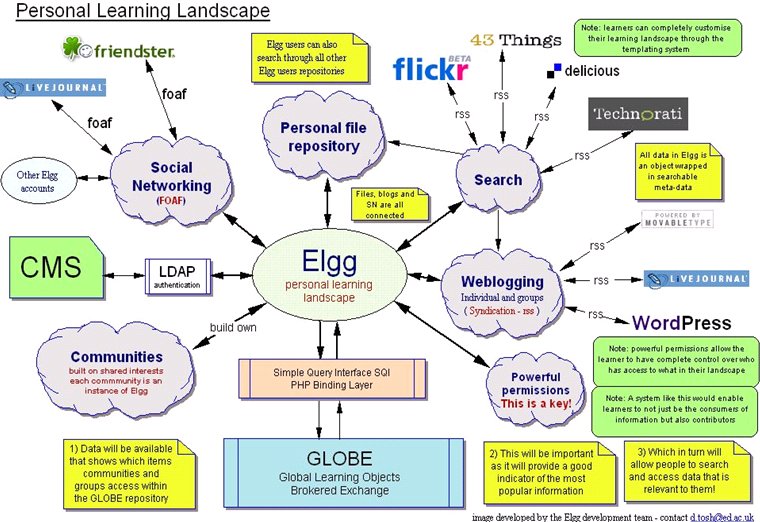
Personal Learning in 2009


When I was a little boy, and the space program was in full bloom, I used to stay up all night waiting for the launch of a rocket into space. An image that always intrigued me was an astronaut surrounded by switches and gauges and knobs. He had all this control and information at his fingertips. It was all very fascinating to me then. this picture of a Boeing Cockpit will have to do, but you get the picture.

I partially fulfilled the dream of experiencing this myself when I became a pilot. While I think that world of a private pilot is still way to complicated with too many knobs and instruments, learning to combine all the information from all the instruments into my mind to help me travel safely from one place to another was fulfilling and satisfying. I guess that is why I miss it so much right now.

In a similar way, there is an idea for personal learning that I have been introduced to this last few months that has some of the same thrill and feeling of control I felt flying.

The idea is having your own personal learning environment and the giving it a bit of time each day.

Here is a link to a movie about 10 things you can do in 10 minutes that can help you in your personal learning quests. [http://www.youtube.com/watch?v=akAfCrOVhrM]

Here are some links to maps others have made that describe their own virtual personal learning environment. Before you go there, please please understand that mine isn't as complete or complicated as theirs, nor will it ever be. So think of the idea more than needing to "be like mike".

http://tesl-ej.org/ej34/m1pix/graphic1.jpg

http://octette.cs.man.ac.uk/jitt/images/5/55/Hibert_PLE_diagram_small.jpg

http://eduspaces.net/davidds/files/9773/22011/miPLEmini.PNG


I think what inspired me here, is taking the step as an adult, to promoting personal learning and growing, without needing a school, or a formal teacher or tests or evaluation or grades. I can start simple, with a blog, and facebook, and a few RSS feeds. And that can teach me a lot.

I do understand that there are many people who have given up on learning. It was like school was finally out for the last time and any form of formal learning went out the window too.

It was never that way for me. I just enjoy learning, mostly from others who are older, more experienced and smarter than I am. I was reminded recently, and painfully that for many, their circle of learning is unfortunately small and limited to like minded people and ideas. These are rarely stretched in their thinking and imagination and are comfortably "excluding" in their vision of "harmony" and group dynamics. Such people are very uncomfortable with different points of view, discussion, and the idea that others, older and wiser, could contribute to their lives in meaningful ways. Afraid I think. Did they get that fear from public schooling? I don't know, but that attitude is "I am pretty self sufficient thank you". So sad. All of us are more complete with the ideas of others.

I am in a happier place now, with others who are stretching and growing, and willing to risk sharing their ideas knowing that sometimes we are right, and sometimes we are wrong. Either way, we continue to learn in rich and deep ways. Is there exclusion here too? Sure. I think that is part of the "natural man" to hurt others through exclusion. Images of PS playgrounds, choosing teams, the new kid a school, cliques pointing and laughing come to mind. It does carry forward into adulthood. The good news is that there is less of it here, slightly. That "slightly" makes all the difference.

This idea of having a Personal Learning Environment is more available now than ever before. Instead of surrounding our selves with switches and knobs and instruments, we surround ourselves with blogs and wikis and relationships on Facebook and Ning where we can expose our ideas to others and receive their comments. Read the ideas of others and "comment" to them wanting to know more. All in all, a very inexpensive learning classroom which we make for ourselves.

Recently, I reached out for ideas from one of the social networks I belong to and had two very meaningful responses. Two people, much smarter and wiser, led me closer to finding the information I was seeking.

For me, having a PLE is important, because, of two quotes that continue to impact my life. I have blogged about them before. James Ferrell, author of "The Peacegiver" said, "Children learn more watching other people learn, than from watching other people teach." The other is from the Harvard Business School, "HOW we teach is WHAT we teach." The common thread for me is the impact of a "teacher" who demonstrates more excitement for personal learning to students, than for expounding and explaining. Having a personal learning environment, often brings to my consciousness, new ideas and perspectives about which I get very excited and animated. This personal excitement and animation is infectious. Also, my students get to see me learning about "teaching" as I try different approaches. When they observe this enthusiasm for not only the topic but the delivery of the topic, they are impacted.

So let's talk more about creating PLE's in 2009. I am preparing a presentation about PLE's and Using Technology to drive learning deeper mostly for my family, but I hope it eventually becomes good enough to post here as well.

Labels: , , ,

Wednesday, July 02, 2008

I Can't Resist


We all worry, more or less and from time to time, about what others think about our efforts as home schoolers. For the most part I think we put our blinders on, and move forward in faith. Very few of us have enough children or have been doing this for long enough, to know for certain that our efforts at home will result in our children being productive, intelligent contributors to the world as they know it. Why is being the 'perfect' home schooling family such an illusive goal?"

It's late. I'm tired. But David sent me a link to read and given how little he has a chance to read internet stuff these days, I knew it must be good. Seth Godin again is where he found the quote. Click here to find the entire article. Here you go:

"The object isn’t to be perfect. The goal isn’t to hold back until you’ve created something beyond reproach. I believe the opposite is true. Our birthright is to fail and to fail often, but to fail in search of something bigger than we can imagine. To do anything else is to waste it all." I know of nothing more true for a home schooling parent, especially a home schooling mom, than this quote.

The quote also goes along with Jim Ferrell's "Students learn more watching other people learn, than from watching other people teach." There is a lot to gain from pondering this one.


http://sethgodin.typepad.com/seths_blog/2008/06/is-it-worthy.html)

Labels: , ,

Thursday, June 12, 2008

What Are YOU Learning Today?

I read recently in "The Choice in Teaching and Education" offered by the Arbinger Institute that students learn more from watching other people learn, than from watching other people teach. I have rolled this around in my mind over and over again. I see evidence of the power of this idea that makes we want to study it more and promote it more.

1) In their books "The Anatomy of Peace", "Leadership and Self-Deception", "The Peacegiver", one theme that threads itself from book to book, is that influencing others to change begins most successfully, when we change ourselves first.

2) Covey says that private victory precedes public victory, and in his book "Succeeding With People" states that the first step in creating influence with others is what? YOu guessed it, "Example".

3) The Savior told us to first take the beam out of our own eye before trying to take it out of others.

4) Then in a recent post on David Weiss' Blog, he quotes noted business leader, Dee Hock, founder and CEO of VISA who indicates that, "The first and paramount responsibility of anyone who purports to manage is to manage self."

5) My personal observation of my wife and I would support this as well. Cyndy always has a place she wants to go, things she wants to learn, books she wants to read and field trips she wants to take. Yes she keep the boys moving forward on their home school projects and internet learning classes, but on top of it all, she has here own life to live as a learner. I think I am the same way.

Maybe the primary qualification for being an "at home instructor/facilitator" is that you have your own personal "curriculum" that the kids watch you do, and get excited about?

I'd say that is about it on that topic.

Labels: , ,

Wednesday, May 21, 2008

Some Wisdom From Alice at Harvard


"I'm quite content to stay here-only I am so hot and thirsty!"

'I know what you'd like!" the Queen said good naturedly, taking a little box out of her pocket. "Have a biscuit?"

Alice thought it would not be civil to say "No" though it wasn't at all what she wanted. So she took it, and ate it as well as she could. And it was very dry and she thought she had never been so nearly choked in her life.

While you're refreshing yourself," said the Queen. I'll just take the measurements. Have another biscuit?"

"No, thank you," said Alice. "One's quite enough!"

"Thirst quenched, I hope?" said the Queen.

Alice did not know what to say to this, but luckily the Queen did not wait for an answer, but went on.

("Teaching and the Case Method" p. 18.)


What are the implications of the following description of teaching, to the quoted narative above?

"How we teach is what we teach."

Further...

"The job of the teacher, as I see it, is to teach students, not how to draw but how to learn to draw. They must acquire some real method of finding out facts for themselves lest they be limited for the rest of their lives to facts the instructor relates. Thev discover something of the true nature of artistic creation - of the hidden processes bv which inspiration works."

( K. Nicolaides, Introduction to the Natural Way to Draw (Boston:Houghton Mifflin, 1941)

Again,

One does not learn to play golf by reading a book, but by taking club in hand and actually hitting a golf ball, preferably under a pro's watchful eye.


To give the map to others (as a teacher might) is to give the results of an experience, not the experience itself by which the map was produced.

The point again is, to trust that you are giving your children a wonderful gift, when you allow them the time and opportunity to follow their own curiosity and discover for themselves the depth and breadth of their interests. They not only learn, but in a very natural way, learn HOW to learn. They learn to trust in their own ability to make sense of the world on their own terms. They become strong in conviction. They get to more of the why of things than just the what. Again, this is a great gift to give to them, The more your you remove your own ego and need to be affirmed by your "students" the more room you make for their personalities to fill up the space you now make available to them. Cyndy would say there is a balance here. I agree. One thing we both value, though, is the tendency our children have, to be very comfortable teaching themselves many things, when they want to learn something. It is just amazing to watch, day in and day out.

Try it for a few weeks and watch the bud blossom. Try if for longer and the plant is truly beautiful, the fruit truly pleasing. At least that has been our experience. Trust them to learn, especially from your example of being curious and learning yourself.

Labels: , , ,